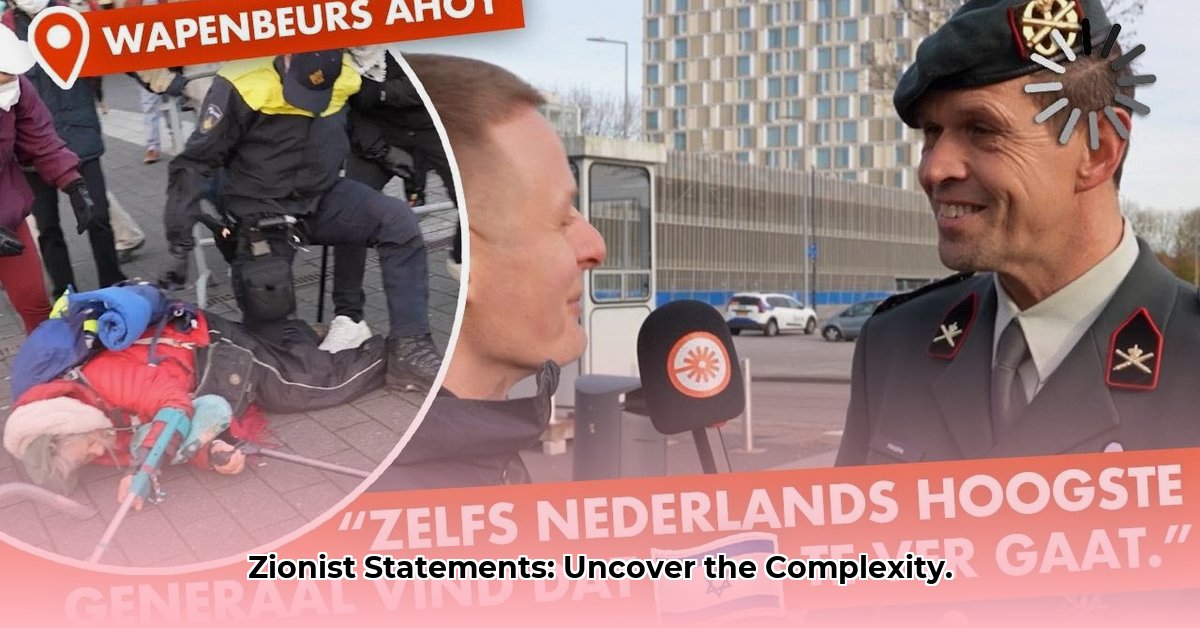
Understanding the Nuances of Zionist Discourse
Understanding the meaning behind Zionist statements requires navigating a complex and often emotionally charged landscape. The term "Zionism" itself evokes strong and often opposing reactions, making objective analysis crucial. This article aims to unpack the multifaceted nature of Zionist discourse, exploring its historical context, religious underpinnings, and the impact of the Israeli-Palestinian conflict on its interpretation. It's not a simple matter of right or wrong, but rather a nuanced exploration of competing narratives and perspectives.
Different Interpretations of Zionism
The core tenets of Zionism – the establishment and support of a Jewish state in the historical Land of Israel – are interpreted differently across various groups. For some, it's a fulfillment of religious prophecy, a homecoming after centuries of diaspora and persecution. For others, it symbolises the displacement and dispossession of the Palestinian people. This fundamental divergence shapes how individuals and groups interpret Zionist statements. How, then, can we reconcile these radically different viewpoints?
Historical Context: From Basel to the Present
The 1897 First Zionist Congress in Basel is a pivotal moment. It marked the formal launch of the organized Zionist movement, aiming for a Jewish homeland in Palestine. However, the path to the establishment of Israel in 1948 was fraught with conflict and shaped the interpretations of Zionism that endure today. The events surrounding the creation of Israel, and the subsequent conflict, remain central to understanding the deeply rooted divisions that exist. Isn't it striking how such a pivotal moment continues to spark such intense debate?
Decoding Zionist Statements: Context Matters
Interpreting Zionist statements requires careful consideration of their historical context, the speaker’s identity, and their intended audience. A statement made by a Zionist leader in the early 20th century holds a different weight and meaning compared to one made today. The language employed frequently carries religious or nationalistic connotations, adding layers of complexity.
For instance, the term "promised land," deeply significant for religious Zionists, evokes feelings of dispossession and injustice among Palestinians. This highlights the need for nuanced understanding, going beyond the literal meaning of the words used. What seemingly innocuous phrases might actually mask deeply embedded biases?
The Influence of Religious and Secular Perspectives
Religious beliefs play a significant role in shaping Zionist perspectives. For many, Zionism is viewed as a religious imperative, a fulfillment of biblical prophecy. This perspective heavily influences their political stances and interpretations of events. However, secular Zionists support the existence of a Jewish state based on national identity and self-determination, without necessarily invoking religious arguments. Acknowledging this spectrum of belief is key to comprehending the range of Zionist expression. How do these different interpretations interact and sometimes clash?
The Israeli-Palestinian Conflict: A Defining Factor
The ongoing Israeli-Palestinian conflict fundamentally shapes the understanding and interpretation of Zionism. It profoundly influences public opinion, often overshadowing more nuanced discussions. This unresolved conflict, with its complex history of violence and displacement, fuels deep-seated grievances and makes objective discourse challenging. To fully grasp the complexities of Zionist statements, we must engage with the brutal realities of the conflict. What are the key points of contention that fuel this ongoing dispute?
Navigating the Complexities: A Path Forward
To effectively understand Zionist expressions, a critical and multifaceted approach is necessary:
- Embrace multiple perspectives: Acknowledge the validity of differing interpretations, avoiding simplistic categorizations.
- Consider historical context: Situate statements within the historical backdrop of the Zionist movement and the Israeli-Palestinian conflict.
- Recognize the influence of religious and secular beliefs: Understand the role of religion and nationalism in shaping interpretations.
- Engage with the Israeli-Palestinian conflict: Acknowledge the conflict's impact on the understanding of Zionist statements.
By adopting this approach, one can begin to unpack the rich and often contradictory narratives surrounding Zionism, leading to a more informed and nuanced understanding. The journey demands empathy, critical thinking, and a willingness to engage with uncomfortable truths. The issue is far from settled, and ongoing research is constantly refining our comprehension of this multifaceted and dynamic subject.
Key Takeaways:
- Zionist discourse encompasses a wide range of interpretations and perspectives.
- Understanding Zionist statements requires careful consideration of historical context, religious beliefs, and the Israeli-Palestinian conflict.
- A nuanced approach that embraces multiple perspectives is crucial for navigating the complexities of this issue.
- The ongoing debate surrounding Zionism highlights the urgent need for thoughtful dialogue and understanding.